Spring Thaw and Flooding

Spring Thaw and Flooding

What Homeowners Should Watch For

As winter begins to fade and temperatures start to rise, many homeowners welcome the arrival of spring. But the transition from winter to warmer weather can also bring an increased risk of spring thaw flooding, especially here in New England where heavy snow accumulation and sudden temperature changes are common.

At Thorp & Trainer Insurance, we encourage homeowners to be aware of the risks that come with spring thaw and take a few simple steps to help protect their homes.

Why Spring Thaw Can Cause Flooding

Throughout the winter, snow builds up on roofs, yards, and surrounding areas. When temperatures rise quickly, that snow begins to melt rapidly. If the ground is still frozen, the melting water has nowhere to go and can pool around foundations or run toward lower areas near your home.

Spring flooding can also be made worse by:

  • Heavy spring rainstorms
  • Blocked storm drains or culverts
  • Ice dams and clogged gutters
  • Poor yard drainage

Even small amounts of standing water near a home can lead to basement leaks or foundation damage.

Steps Homeowners Can Take

While you can’t control the weather, there are several ways to reduce the risk of water damage during the spring thaw.

Keep gutters and downspouts clear.
Remove debris and make sure downspouts direct water several feet away from your foundation.

Check your sump pump.
If your home has a sump pump, test it before spring rains arrive to ensure it’s working properly.

Clear snow away from your foundation.
If large snowbanks are piled against your home, try to move them a few feet away to reduce melting water buildup.

Make sure nearby drains are clear.
Blocked street drains can cause water to pool and potentially make its way toward your property.

Review Your Insurance Coverage

It’s also important to understand what your homeowners insurance does—and does not—cover. Standard homeowners policies typically cover certain types of water damage, but flooding from rising groundwater or surface water often requires separate flood insurance coverage.

If you’re unsure about your coverage, the team at Thorp & Trainer Insurance is happy to help review your policy and answer any questions you may have.

Have questions about protecting your home this spring?
 Contact us today—we’re here to help you stay prepared for every season.
Watch Out for Black Ice

Watch Out for Black Ice

Winter Driving Tips from Thorp & Trainer Insurance

Winter in New England brings its fair share of snow, sleet, and freezing rain but one of the most dangerous hazards on the road isn’t always visible. Black ice can catch even the most experienced drivers off guard, turning an ordinary commute into a dangerous situation in seconds.

At Thorp & Trainer Insurance, we want to help you stay safe and prepared throughout the winter months. Here’s what you need to know about black ice and how to protect yourself on the road.

What Is Black Ice?

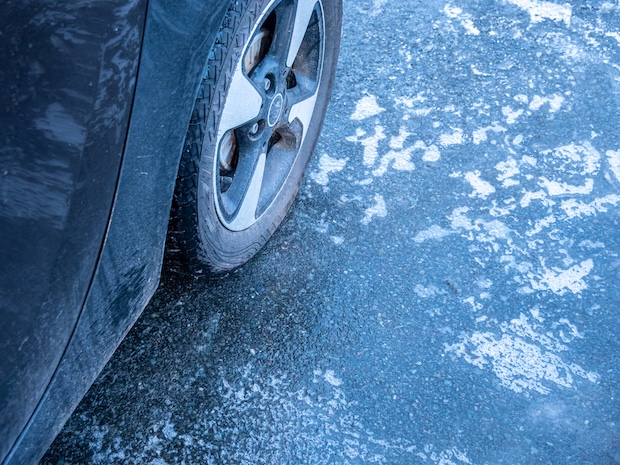
Black ice is a thin, transparent layer of ice that forms on road surfaces, often making pavement appear simply wet rather than frozen. Because it’s nearly invisible, drivers may not realize it’s there until their vehicle begins to slide.

Black ice commonly forms when:

  • Temperatures hover around freezing (32°F or below)
  • Snow melts during the day and refreezes overnight
  • Light rain or drizzle freezes on cold pavement
  • Early mornings and late evenings bring rapid temperature drops

Bridges, overpasses, shaded roads, and less-traveled streets are especially prone to black ice.

Why Black Ice Is So Dangerous

Unlike snow or slush, black ice provides almost no traction. Even careful drivers can lose control if they:

  • Brake suddenly
  • Accelerate too quickly
  • Turn the steering wheel sharply

These sudden movements can cause vehicles to skid, spin, or slide into other cars or off the road.

Tips for Driving Safely on Icy Roads

While you can’t always avoid black ice, you can reduce your risk with a few smart precautions:

  1. Slow down.
    Reducing speed gives you more time to react and helps maintain control if you hit a slick spot.
  2. Increase following distance.
    Leave extra space between your vehicle and others—at least 6–10 seconds in winter conditions.
  3. Avoid sudden movements.
    Brake and accelerate gently, and steer smoothly to maintain traction.
  4. Watch for warning signs.
    If the road looks glossy or reflective in cold temperatures, assume it could be icy. Pay extra attention on bridges and shaded areas.
  5. Know how to handle a skid.
    If your car starts to slide, stay calm. Ease off the pedals and gently steer in the direction you want the front of the car to go. Avoid slamming on the brakes.

Make Sure Your Insurance Is Ready for Winter

Even with the best precautions, winter accidents can happen. Having the right auto insurance coverage ensures you’re protected if the unexpected occurs.

At Thorp & Trainer Insurance, we’re here to help you review your policy, understand your coverage, and make sure you’re prepared for whatever this winter brings.

Have questions about your auto insurance coverage?
Contact our team today—we’re always happy to help keep you and your family protected on the road.

Who Owns Your Property?

Who Owns Your Property?

An increasing number of Americans are transferring their property into a Trust or a Limited Liability Corporation (LLC).

Transferring real estate into a separate legal entity may be a sound financial decision, but it can also create significant unintended consequences with your insurance coverage.

When making this type of legal change, please contact your account manager. Your insurance policy needs to reflect that there is a new owner of your property. (Trust or LLC)

The Insurance Company will require the amended deed showing the change in ownership. If the named insured appearing on the policy is incorrect, there could be considerable delay in any future policy changes, return premiums and/or claim payments.

If you feel this applies to you, please call your account manager 401.596.0146 with any questions or concerns.

They Call It Snail Mail for a Reason

They Call It Snail Mail for a Reason

We have all experienced much longer delays in the mail service.

Insurance payments sent to this office or direct to the Insurance Company, oftentimes arrive after the due date which could cause a potential cancellation for nonpayment.

If online banking is your method of paying bills, please be advised that many companies do not accept electronic transfers. In this scenario, your bank will print and mail a physical check on your behalf with a typical delivery time of 5-7 business days or more.

Moving forward, we recommend planning and allowing more time for the delivery of essential paperwork and checks, especially if there is a deadline.

To ensure your account and payments stay in good standing, we highly recommend that you call our office to make your payments, 401.596.0146.  We can take payments over the phone using most credit cards, debit cards, and e-checks.

Of course, if there is ever any doubt, please give your account manager a call 401.596.0146 and we would be happy to help you.

Thank you.

Watch out for Deer!

Watch out for Deer!

Between the months of October and December, it’s common to see deer leap onto a busy road.   

Tips to avoid deer on the road

  • Stay Alert.  Pay attention to “deer crossing” and “wildlife crossing” signs and be cautious near woods or water.
  • Use high beams. Flicking your high beams on an animal in the road may cause the animal to scurry away.  High beams also help illuminate dark roads
  • Don’t swerve.  If a car crash is inevitable, maintain control of your vehicle and stay in your lane.
  • Brake, as necessary.  If you can’t avoid hitting the animal, reduce your speed, honk your horn, and tap your brakes to warn other drivers. 
  • Remember peak season.  Animal collisions happen most during October through December.
  • Watch for animals in the road between dusk and dawn.
  • Watch for herds.  If you see one deer, there are probably more nearby.
  • Always obey the speed limit and wear seatbelts.


Does insurance cover hitting a deer?

You’re covered for hitting a deer or other animal on the road if you have comprehensive coverage, an optional coverage you may add to your auto policy.  Some drivers have comprehensive coverage, but it isn’t required unless you lease or finance your car.  If you only carry liability coverage, you won’t be covered for hitting a deer. 


What to do if you hit a deer

  • Move your vehicle to the side of the road, away from the animal.
  • Turn on your car’s hazard lights and remain in the vehicle until it’s safe to exit.
  • Call the police, let them know if the animal is blocking the road, as it could pose a danger to oncoming drivers.
  • Stay clear of the animal.  An injured deer will be frightened and could harm you.
  • Make sure your car is safe to drive.  Look specifically for things like leaking fluids, broken lights, or a hood that won’t stay latched.

Call your insurance professional at Thorp & Trainer to update your coverage or to ask any questions you may have about auto insurance and animal collisions.  

Excess Flood Insurance

Excess Flood Insurance

Excess flood insurance is a type of flood insurance policy that provides additional coverage above the limits of a primary flood insurance policy, such as one provided through the National Flood Insurance Program (NFIP).

Key Points:

  • NFIP Coverage Limits (as of 2025):
    • Residential buildings: up to $250,000
    • Personal contents: up to $100,000

These limits may not be enough for high-value homes or businesses.

  • Excess Flood Insurance:
    • Kicks in after NFIP or primary policy is exhausted
    • Available through private insurers
    • Covers higher property values, additional contents

Example:

If your home is worth $600,000 and it’s destroyed in a flood:

  • NFIP pays up to $250,000
  • Excess flood insurance can cover the remaining $350,000

Who Needs It?

  • Homeowners in high-value homes
  • Businesses with valuable equipment or inventory
  • Property owners in high-risk flood zones


Important Notes:

  • You typically must have an NFIP (or primary flood) policy to buy excess flood insurance.
  • Excess flood insurance is often sold through private insurers, not FEMA.
  • Coverage specifics vary by insurer — read the policy terms carefully.
Are E-bikes covered by home or auto insurance?

Are E-bikes covered by home or auto insurance?

In general, e-bikes are not automatically covered by standard homeowner’s or auto insurance policies. 

Here’s why and what your options are.

Homeowner’s/Renter’s Insurance:

  • Limited/Excluded Coverage: Many policies classify e-bikes as “motorized vehicles,” which are often excluded or have limited coverage under standard homeowners or renters policies.
  • Property Coverage Only at Home: Even if your e-bike is covered for theft or damage, it’s often limited to when the bike is at your residence, leaving it unprotected while riding.
  • Potential Endorsement: Some insurers offer endorsements extending coverage for e-bikes, but it’s crucial to check your policy for specifics. 

Auto Insurance:

  • Generally Not Covered: Most auto insurance policies do not cover e-bikes as they do not fit the criteria for a typical vehicle.
  • Different Classification: E-bikes are regulated more like bicycles and do not require the same licensing or registration as cars or motorcycles, making them unsuitable for auto insurance coverage. 

Why are e-bikes treated differently?

  • Motorized Component: The presence of a motor, even pedal-assist, can lead to e-bikes being categorized differently than traditional bicycles.
  • Increased Risk: E-bikes can travel at higher speeds, potentially increasing the risk of accidents and liability claims. 

Your Options for E-bike Insurance:

  • Specialized E-bike Insurance: Several of our companies offer policies specifically designed for e-bikes, covering theft, damage, liability, and even medical payments.
  • Add coverage endorsement: Some insurance providers may allow you to add coverage for your e-bike to your existing homeowner’s or renter’s policy.
  • Check with your account manager: The most important step is to contact us to understand your current coverage and discuss options for insuring your e-bike. 

In Conclusion:

Do not assume your e-bike is covered by your existing insurance. It’s highly recommended that you consider dedicated e-bike insurance or possibly adding a specific endorsement to ensure your valuable investment is adequately protected. 

Atlantic Hurricane Season

Atlantic Hurricane Season

During the Atlantic hurricane season, which lasts from June to November, every coastal state from Florida to Maine could potentially be hit by a storm. Increasing activity along the coastal areas of these states has put more homes at risk of severe windstorm damage. To limit their exposure to catastrophic losses from natural disasters, insurance companies in these states sell homeowners insurance policies with percentage deductibles for storm damage instead of all other perils deductibles (AOP), which are used for other types of losses such as fire, water, or theft. With a policy that has a $500 AOP deductible, for example, the policyholder must pay the first $500. Percentage deductibles are based on the home’s insured value. Therefore, if a house is insured for $300,000 and has a 5% deductible, the first $15,000 of a claim must be paid out of the policyholder’s pocket.

There are two types of percentage deductibles:

  • Hurricane deductibles, apply to damage solely from hurricanes. Typically varying from 1% to 5% of a home’s insured value
  • Windstorms or wind/hail deductibles, which apply to any kind of wind/hail damage. Typically varying from 1% to 5% of a home’s insured value.

A “trigger” is an event needed for a percentage deductible to apply. Hurricane deductibles are “triggered” only when there is a hurricane, or a tropical storm. Triggers vary by state and insurance company and may apply when the National Weather Service “names” a tropical storm, declares a hurricane watch or warning, or defines the hurricane’s intensity. Triggers include a timing factor, i.e., damage occurring within 24 hours before the hurricane makes landfall, and up to 72 hours after the hurricane is downgraded to a lesser storm or a hurricane watch is cancelled.

Hummingbird Cake

Hummingbird Cake

3 cups flour

1 teaspoon baking powder

1 teaspoon salt

2 cups sugar

1 teaspoon cinnamon

1 ½ cups vegetable oil

3 eggs beaten

2 teaspoons vanilla

1 (8 oz) can crushed pineapple (drained)

1 cup pecans

2 cups chopped banana


Preheat oven to 350.  Grease and flour 11 x 17 jelly roll pan. 

Combine flour, sugar, baking powder, salt, and cinnamon in large bowl.  Add eggs and oil.  Stir until moistened-do not beat.  Stir in bananas, vanilla, pineapple, and pecans.  

Bake 25-30 minutes or until done.


Icing

1 8oz soften cream cheese

½ cup softened butter or margarine

4 cups confectionary sugar

1 teaspoon vanilla

½ cup pecans


Beat cream cheese, butter, confectionary sugar, and vanilla until light and fluffy.  Add pecans.  Spread icing over top of cooled cake.


Understanding Assessed Value vs Replacement Cost

Understanding Assessed Value vs Replacement Cost

Westerly recently conducted a tax assessment reevaluation. We are often asked by our clients about the correlation between “assessed value and replacement cost”. The difference between these primarily revolve around their purpose and how they’re determined. Below is a breakdown of each:

1. Tax-Assessed Value:

  • Definition: The tax-assessed value is the value of a property as determined by the local tax authority for the purpose of calculating property taxes. 
  • Determining Factor: It’s typically based on a combination of factors, including the market value of the property, location, size, age, and condition of the home. 
  • Purpose: The tax assessed value is primarily used to determine how much property tax you will pay.

2. Replacement Cost:

  • Definition: Replacement cost is the amount of money it would take to rebuild the property from scratch, considering current construction costs, labor, and materials. It does not include the value of the land. 
  • Determining Factor: Replacement cost is based on construction costs and how much it would cost to replicate the home using similar materials and design in today’s market. 
  • Example: If your home is destroyed, the replacement cost would be the price to rebuild it with current materials and labor, not including the land value. 

Key Differences: 

  • Purpose: Tax assessed value is used for property tax calculations, while replacement cost is used for insurance purposes to determine how much coverage is needed to rebuild the home. 
  • Factors Considered: Tax assessed value includes the value of the land and is affected by the local real estate market, while replacement cost is only concerned with rebuilding the structure itself (no land value). 
  • Value Variations: The tax assessed value can be lower or higher than the cost to rebuild your house, whereas the replacement cost focuses specifically on construction costs. 

In summary, tax assessed value is about taxation and is based on property value, while replacement cost is about how much it would cost to rebuild the home. 

For more information, please contact our office at 401.596.0146.